
Loading...
Serving Ashland, KY and surrounding areas. (606) 393-8007
Drafty rooms and rising energy bills are usually an attic problem. Blown-in insulation fills every gap so your home holds temperature the way it should, all year long.
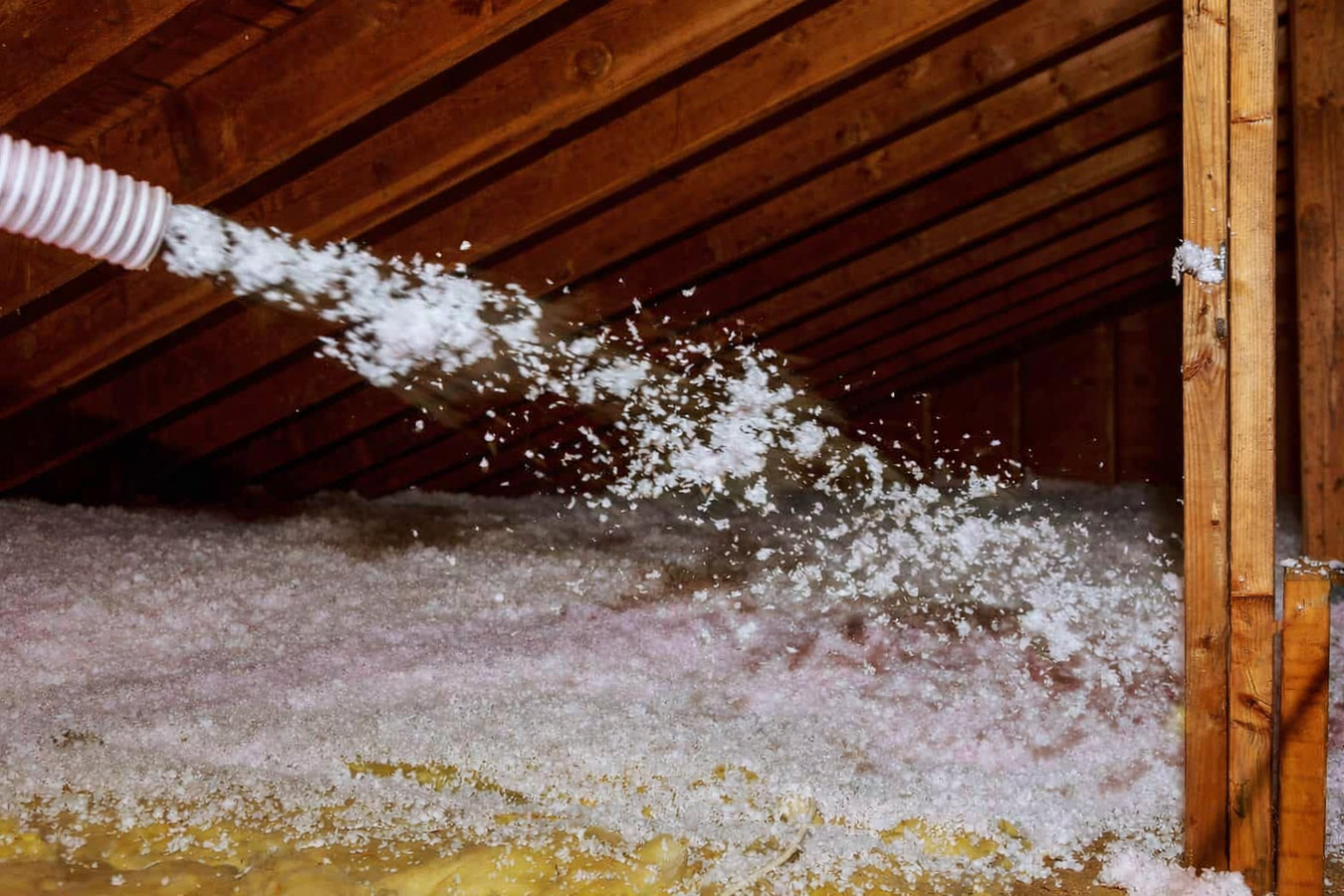
Blown-in insulation in Ashland fills your attic floor with loose material - fiberglass or cellulose - blown in through a hose until it reaches the right depth, and most attic jobs are finished in a single day. The material wraps around rafters, joists, and odd angles that rigid batts leave exposed, so there are no thin spots for heat to escape. Ashland homeowners with thin or settled attic insulation typically notice the difference within the first heating or cooling season.
A large share of homes in Ashland were built before insulation standards existed in any meaningful form. If your attic has only a few inches of old, compressed material, blown-in is one of the least invasive ways to bring it up to where it needs to be - no demolition, no disruption to finished spaces. It works especially well alongside whole-home insulation projects that address multiple areas at once.
The federal government also offers an energy efficiency tax credit for qualifying insulation upgrades. The IRS Energy Efficient Home Improvement Credit can offset up to 30% of your materials cost, up to $1,200 per year - ask your contractor to itemize the invoice so you can claim it.
If your heating bill in January or cooling bill in July keeps rising with no change in your habits, thin attic insulation is one of the most common causes. Heat escapes through a poorly insulated attic faster than almost anywhere else in a home. In Ashland's climate, where both seasons put real pressure on your HVAC system, this shows up first on your utility statement.
Look into your attic through the access hatch. If you can clearly see the wooden beams running across the floor, your insulation is too thin. A properly insulated attic has those beams buried and invisible under the material. This is one of the easiest checks a homeowner can do without any tools.
If the upstairs bedrooms bake in July while the downstairs stays comfortable, or one room never warms up in winter no matter what the thermostat says, insulation above those spaces is not doing its job. This is especially common in older Ashland homes where attic material has settled unevenly over the decades.
When heat escapes through a poorly insulated attic, it warms the roof deck and melts snow, which refreezes at the cold eaves as ice dams. This is a known issue in the Ohio Valley during hard winters. Ice dams can back up under shingles and cause water damage inside the home - a strong signal that your attic insulation needs attention.
We install both fiberglass and cellulose blown-in insulation, and the right choice depends on your attic layout, existing material, and budget. Cellulose is a popular option in older Ashland homes because it fills gaps very densely and is made from recycled material treated to resist fire and pests. Fiberglass is widely available and holds its shape well in attics with good air circulation. Either way, we assess your specific attic before recommending one over the other. For homeowners dealing with thin attic insulation across the entire home, we also offer full attic insulation packages that pair blown-in material with a thorough inspection of the attic floor.
For most existing homes, the most cost-effective approach is a simple top-up - adding new blown-in material on top of what is already there, without removing or disturbing existing insulation. When air sealing is needed first (gaps around fixtures, plumbing, or the tops of interior walls), we handle that as part of the same visit. Addressing leaks before blowing in material makes a meaningful difference in performance. We also offer whole-home insulation assessments for homeowners who want to look at attic, walls, and crawl space together.
A good fit for attics with straightforward layouts and homeowners looking for a durable, widely available option.
Made from recycled paper treated to resist fire and pests - preferred in many older Ashland homes for its dense gap-filling performance.
Adds blown-in material on top of existing thin insulation without removing what is already there - the most common and cost-effective approach.
Combines air sealing of gaps around fixtures and framing with blown-in insulation for noticeably better results than insulation alone.
Ashland sits in a climate that works your home hard from both directions - summer temperatures regularly climb into the upper 80s and 90s, and winter lows can drop well below freezing during cold snaps off the Ohio River. A home with thin or compressed attic insulation feels this in both seasons: stuffy and expensive to cool in July, drafty and expensive to heat in January. Blown-in material is particularly well-suited to Ashland because it handles the irregular joist spacing and varied ceiling heights common in pre-1970 construction across Boyd County. Homeowners in Catlettsburg and Russell face the same housing conditions and benefit from the same approach.
The Ohio River corridor also keeps humidity higher here than in drier parts of Kentucky, especially in spring and summer. High moisture in an under-insulated attic can, over time, contribute to condensation and ventilation problems. A good contractor will check for signs of moisture issues before blowing in new material - because adding insulation on top of a moisture problem can make things worse, not better. Kentucky Power has historically offered rebate programs for insulation upgrades in this service area, so it is worth checking with them before scheduling your project to see whether any current incentives apply.
We ask a few basic questions about your home and schedule a visit. Most Ashland homeowners get a same-week appointment, and we reply to all online requests within 1 business day.
We go up into your attic, measure what is already there, and check for any air leaks or moisture issues that should be addressed before new material goes in. You get a written estimate before any work is scheduled.
Our crew sets up a blowing machine outside and runs a hose through your attic hatch. Most Ashland attic jobs are finished in two to four hours, and you can be home during the entire process.
Before we leave, we verify insulation depth at multiple points using depth markers, clean up any material outside the attic, and make sure the access hatch is properly covered. You are welcome to look at the depth markers before we pack up.
Call us or fill out the form below. We respond within 1 business day and serve all of Ashland and the surrounding Tri-State area.
(606) 393-8007Every job begins with a written estimate that explains exactly what will be done, what materials will be used, and what the total cost is. There are no surprise line items when the invoice arrives.
We have been working on homes in Ashland and across Boyd County since 2017. We know the housing stock here - the pre-1970 construction, the hillside lots, the humidity near the river - and that experience shows in how we assess and install.
We place depth markers in the attic and verify the insulation meets the target level before we pack up equipment. You can inspect the markers yourself - a step many contractors skip entirely.
We document each job from start to finish and walk you through the depth markers and finished attic before we pack up. When a project needs a permit, we coordinate it and schedule the inspection so you do not have to.
These are not marketing promises - they are the things homeowners in Ashland consistently ask about before they hire anyone. We answer all of them upfront because a confident customer makes for a smoother job. The U.S. Department of Energy provides guidance on recommended insulation levels for every climate zone, and we install to those standards on every job.
A whole-home insulation assessment covers attic, walls, and crawl space together so nothing gets missed.
Learn MoreFull attic insulation services including removal of old material and installation of new coverage.
Learn MoreCall Custom Ashland Insulation today for a free on-site estimate. Most projects are scheduled within the same week you reach out.