
Loading...
Serving Ashland, KY and surrounding areas. (606) 393-8007
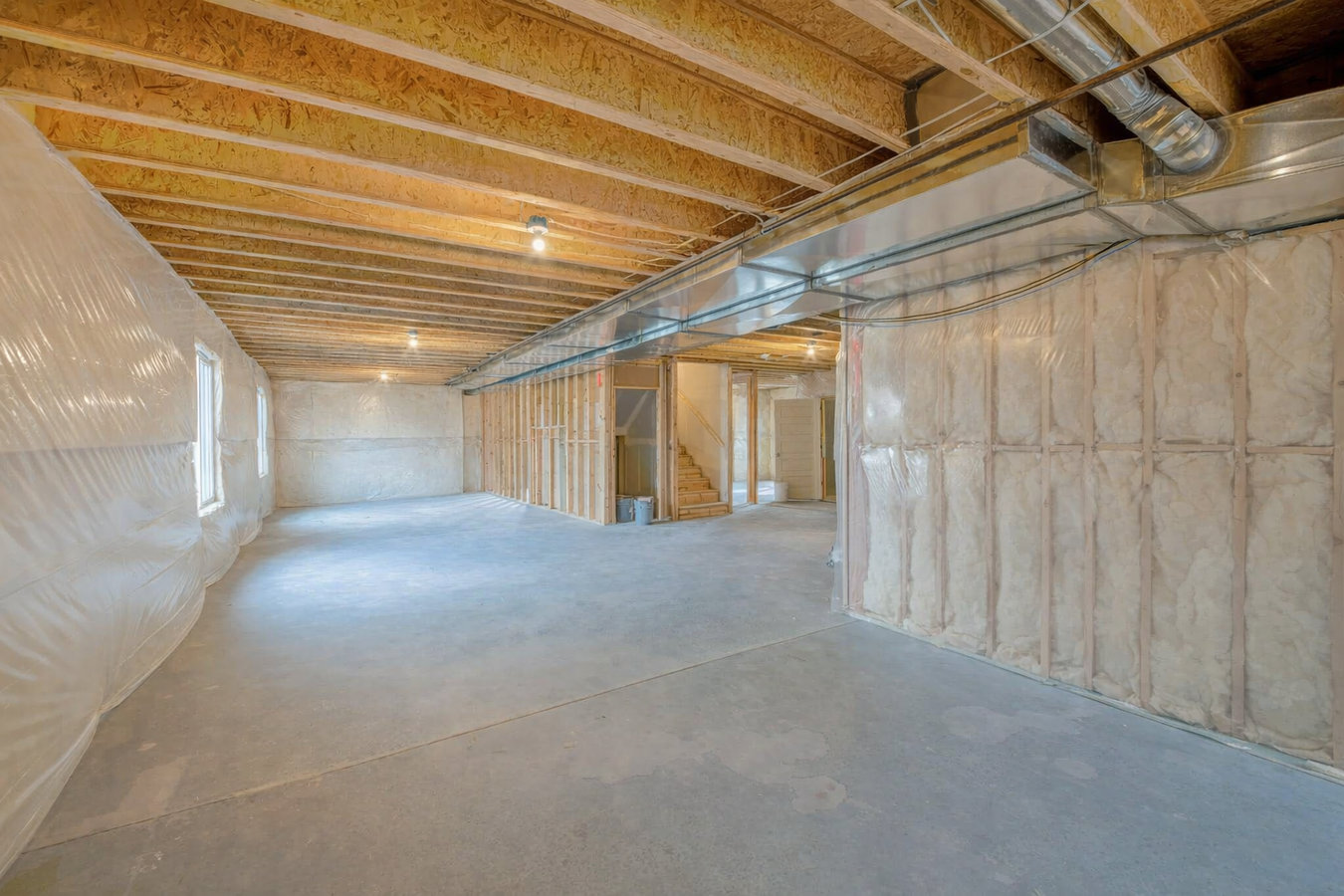
If your first floor feels cold all winter and your heating bill keeps climbing, an uninsulated basement is likely the cause. We stop the problem at the source.
Basement insulation in Ashland, KY creates a barrier between the cold ground and your living space - stopping heat from escaping through foundation walls and the floor system above, with most standard projects completed in one day.
A large share of homes in Ashland were built before the 1970s, when basement insulation was rarely included in residential construction. That means heat you are paying for right now is moving through your floor, down through the basement, and out through the foundation walls. Basement insulation in Ashland is one of the most cost-effective improvements you can make to an older home - and you will feel the difference in your floors within the first cold snap after the work is done.
Basements share a lot of the same challenges as crawl spaces - moisture, cold air, and aging materials. If your home does not have a finished basement, our crawl space insulation service addresses very similar problems in homes without a full basement.
If the floor above your basement feels noticeably cold underfoot in winter - especially near the edges of rooms - heat is escaping through an uninsulated basement ceiling. This is one of the most common complaints from homeowners in older Ashland neighborhoods, where the original construction simply did not include any basement insulation. The longer it goes unaddressed, the more you spend on heat that never reaches the rooms you use.
Ashland winters are cold enough that an uninsulated basement can account for a significant chunk of your monthly heating bill. If your gas or electric costs jump sharply in the coldest months and your system seems to run constantly, the basement is often where the problem starts. Insulating that space gives your heating system somewhere warm to push the heat - instead of losing it straight through the floor.
A damp or musty smell in your basement - especially after rain or during humid summer months - signals that moisture is moving through your foundation walls. In Ashland, Boyd County receives around 43 inches of rainfall per year, and the Ohio River valley terrain means many homes sit on ground that holds moisture. That moisture needs to be addressed before insulation goes in, or the problem gets worse, not better.
If a pipe in your basement has frozen during a past Ashland winter - or if pipes feel ice-cold to the touch in January - your basement is not retaining enough heat. Insulating the walls and rim area, where your foundation meets the wood framing, is one of the most effective ways to protect pipes from freezing. Ashland gets hard freezes every winter, and a frozen pipe is an expensive emergency you do not want to deal with.
We insulate both finished and unfinished basements, and we match the material to the specific conditions of your home. For foundation walls and rim joists - the band of framing that sits right on top of your foundation - we typically use closed-cell spray foam, which seals air leaks and acts as a moisture barrier at the same time. For the ceiling of an unfinished basement - the underside of your first floor - we may use rigid foam board or batt insulation depending on your layout and budget.
Every basement project starts with a walkthrough to check for moisture issues before any material goes in. If there is a water problem, we tell you plainly what needs to happen first - skipping that step is how insulation jobs fail. We also handle rim joist sealing, which is one of the highest-impact improvements in most Ashland homes and often gets overlooked.
Best for unfinished basements where the concrete or block walls are exposed - stops cold air and ground moisture from entering the living space above.
Spray foam applied to the rim joist seals the single biggest air leak in most Ashland homes and protects water pipes from freezing on hard winter nights.
Best for unfinished basements used as storage or utility space - insulating the ceiling above keeps the first floor warm without heating the basement itself.
Best for homeowners with a finished basement - drywall room, home office, or guest room - that was never properly insulated behind the walls.
Ashland sits in the Tri-State region where Kentucky, Ohio, and West Virginia meet, with average January lows hovering around 24 degrees Fahrenheit. Winters here are genuinely cold, and the combination of that cold air and the high humidity that comes with living in the Ohio River valley creates conditions that are hard on uninsulated basements. Ground moisture works its way through foundation walls, cold air infiltrates through rim joists, and the result is a floor system that pulls heat out of your home all season long. Many Ashland homeowners who have had their basements insulated notice the difference in both their floors and their heating bills within the first winter. The U.S. Department of Energy recommends basement insulation as one of the most cost-effective home improvements available to homeowners in cold-climate regions.
We regularly work on homes throughout the Ashland area, including Catlettsburg and Russell, where the housing stock is similar - older homes with stone or brick foundations that were never insulated and have been fighting the same cold and moisture issues for decades. A contractor who knows these homes understands what they are walking into before the estimate visit even starts.
You reach out by phone or through our contact form. We reply within one business day, ask a few basic questions about your basement, and schedule a free in-person estimate at a time that works for you.
We walk through your basement - checking walls, rim joists, existing insulation, and any signs of moisture. You get a written quote before any work is scheduled, and we answer every question you have during the visit. No pressure, no surprises.
The crew arrives with materials and equipment, works in your basement, and cleans up as they go. You do not need to leave your home. Most unfinished basements are done in a single day - clear stored items away from the walls before the crew arrives and the rest takes care of itself.
Before the crew leaves, we walk you through what was done and point out anything worth knowing - including any spots where we found unexpected gaps or moisture signs. The basement is left clean, and you can use the space normally right away.
Free estimate, no obligation. We respond within one business day and give you a written quote before any work begins.
(606) 393-8007Before any material goes into your basement, we check for water intrusion - because insulating over a moisture problem is what makes insulation jobs fail. In Ashland's wet climate, this step is not optional. We tell you plainly what we find, and if there is a moisture issue, we tell you exactly what needs to happen before insulation makes sense.
Before any work starts, you get a free written estimate that lays out exactly what we are doing, where, and what it costs. When your basement project needs a permit, we coordinate it and schedule the inspection so you do not have to. No vague phone quotes and no surprises when the job is done.
Ashland's housing stock skews old - many homes here were built before 1960, with stone or brick foundations and framing that has been settling for decades. We know what to expect in these homes, where the irregular surfaces are, and what materials work best in those conditions. A contractor who is used to newer construction will miss things we would not.
You see the finished work and get a clear explanation of what was done before we leave your property. We do not disappear once the job is complete. If you have questions in the days after, we answer them - and if anything looks off, we come back.
These are not just talking points - they are the things that separate a job done right from a job that creates problems three years later. When you call us for basement insulation in Ashland, you get a contractor who has done this work in homes just like yours and knows how to do it well.
The dense, rigid spray foam we most often use in basements and rim joists - it insulates and stops moisture at the same time.
Learn MoreFor homes built over a crawl space rather than a full basement - the approach is similar, and we handle both.
Learn MoreAshland winters do not wait. Lock in your installation date now and feel the difference before the next cold snap.